
Most firms operating in the space claim that they have seen at least a two-fold rise in orders as compared to other times.

With the lockdown in force, live online teaching has become the order of the day, report Peerzada Abrar and Sai Ishwar.

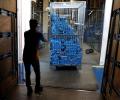
What is aggravating the situation is that e-commerce firms are facing huge shortage of delivery personnel. They have not been able to bring back their staff to work, despite offering higher pay and Covid-related insurance packages.
The companies have asked for digital curfew passes as e-retailers feel if more lockdowns are ordered after April 14, it is extremely difficult and time-consuming process to acquire the passes from local authorities.

What will happen to the job placement and summer internship plans of India's management and IIT students? Many campuses are stepping in to help students hang on to their placements, in spite of the lockdown.

Over the past week, several unusual partnerships among start-ups, traditional businesses and hospitals have been announced, and several more are likely to materialise soon. The trend could see increased importance of gig workers, who are taking considerable risk to deliver goods to people in the time of a pandemic.

For now, Bounce, Shuttl, Fab Hotels, Instamojo, Zomato, Curefit, and HealthifyMe, among others, are going for salary deductions. Most of the consumer internet start-ups, besides those who are in the grocery delivery, education tech, and video conferencing business, would ultimately lay-off people and cut back salaries.

While some researchers are developing prototypes for ventilators to overcome their shortage, others have teamed up to develop testing kits.

Thanks to technological support provided by BlinkIN, a Bengaluru-based intelligent visual-assistance company, engineers in Wuhan were able to remotely install air ventilation systems in two hospitals in Wuhan, the epicentre of the coronavirus pandemic, reports Peerzada Abrar.

'90 per cent of the food and grocery business is still with the kiranas.' 'If kiranas are not allowed to operate, it becomes a serious issue.'

However, many of these firms were facing an uphill task of convincing the people on the ground to return to work, as many are apprehensive of their safety.

'We are going to be overwhelmed by the need for hospital beds. There are simply not enough beds in government hospitals.' 'We will need a large number of medical professionals and without the private sector's involvement, the government won't be able to expand capacity.'

There is a lot of police action on the ground and even inter-state movement has been stopped, because of which deliveries of essential items via platforms, such as Flipkart, Amazon, Grofers, and Milkbasket, aren't happening. Food-delivery firms -- Swiggy and Zomato -- are facing similar challenges, according to the sources.

According to a survey by community platform LocalCircles, early-stage start-ups, funding dependent start-ups and many small businesses will soon be fighting for survival as the spurt in coronavirus cases hits them hard.

Bengaluru-based Healthtech start-up Mfine has rolled out a coronavirus assessment feature which enables virtual medical consultation to assess patients who have flu-like symptoms. Portea and Haptik habe developed chatbots, which will disseminate information related to coronavirus.

E-commerce companies are seeing an increase in demand for products such as fresh fruits and vegetables, milk, flour, rice, and lentils, and personal hygiene items like sanitisers and soaps and household cleaning products. Other products include instant noodles, baby food and Ayurvedic items. "There is even a huge spike in pet food," said a person.

After a gruelling 24 hours, the PhonePe team has fully restored UPI on the payment platform. The app is up and running again with ICICI Bank as its new partner with all payment instruments enabled.

The Bengaluru-based firm competes with US rival Uber whose lukewarm IPO last year has contributed to the lag in valuation trend among the unicorns across the Indian start-up ecosystem.

The Hyderabad-born Nadella says it's not the AI engine, but the teams that build it as well as the algorithms to make it intelligent have to be diverse and inclusive, so that the solutions they build do not show up any sort of 'unconscious bias' that they may have.
The case may drag for a few years, experts say, as CAIT and DVM have said they will appeal against the interim relief granted to Amazon.
 © 2026 Rediff.com - Investor Information - Advertise with us - Disclaimer - Privacy Policy - Sitemap - Feedback - About us - Terms of use - Grievances